Look, Listen and Be Seen

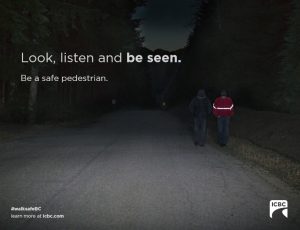
LOOK, LISTEN AND BE SEEN

ICBC is launching a new education campaign across the province to help keep pedestrians safe this fall and winter when crashes involving pedestrians increase significantly in B.C.

be safe be seen visible safetyOn average, 76 per cent more pedestrians are injured in crashes from November to January every year when conditions are dark and weather is poor compared to June to August in B.C.*

ICBC is partnering with TransLink, Transit Police and BC Transit with new advertising featured on SkyTrains and in buses across B.C. to reach pedestrians on transit.

ICBC and community policing volunteers throughout B.C. will also be handing out pedestrian safety reflectors and tips at events throughout the province to help educate pedestrians about the importance of being visible to drivers in dark, fall conditions.

In a new ICBC survey, 76 per cent of drivers and 83 per cent of pedestrians stated they’re concerned about hitting a pedestrian or being hit by a driver in an intersection. Yet, on average, 75 per cent of crashes with pedestrians still occur at intersections in B.C.


ICBC Shift into Winter Safety Driver

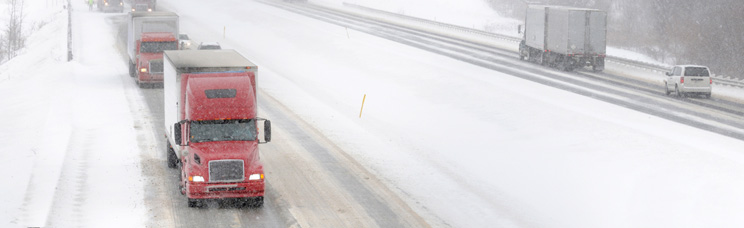
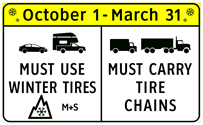
shift-into-wintersnow tires snow flakes m+ stires malahat safety winter M+S snowflake    As a member of the Alliance, Mainroad South Island Contracting encourages everyone to shift into winter driving mode and prepare for the upcoming season. Don’t wait until snow arrives.  Whether you’re driving across town, or across the province, it’s important that you and your vehicle are prepared for winter conditions.

Be part of the solution.  A few simple steps could make a difference to your safety:

  • Road and weather conditions change quickly in winter and so should your driving.  Even the most confident drivers are at risk on slippery roads.  Slow down to a safe driving speed.

  • Install four matched winter tires.  Tires marked with a 3 peak mountain/ snowflake symbol on the sidewall offer the best traction on snow and ice and in severe winter conditions.

  • Give your vehicle a winter check-up: Make sure the battery, brakes, lights, fuses, cooling/heating systems, exhaust/electrical systems, belts and hoses are in top shape.

  • Before each trip, do a ‘circle check’ (walk around your vehicle to inspect its condition and possible reversing hazards).

  • Review your vehicle’s maintenance record. Take it in for repair if needed and report any concerns to your supervisor.

  • Keep your gas tank full to avoid condensation which can cause fuel lines to freeze.

  • Equip your work vehicle with a Winter Survival Kit. Recommended items include: an approved high-visibility vest, non-perishable food, blankets, first aid supplies, windshield scraper, snow brush, spare tire, wheel wrench & jack, shovel & traction mat, sand or kitty litter, fuel line antifreeze, flares & matches or a lighter, tire chains & gloves, flashlight & extra batteries, battery jumper cables, sandbags for extra weight, extra clothing & footwear. Do it now, before you’re caught off guard.

Know how to recognize a scam

Know how to recognize a scam:SCAM Pic


There are many fraud types, including new ones invented daily.

Taxpayers should be vigilant when they receive, either by telephone, mail, text message or email, a fraudulent communication that claims to be from the Canada Revenue Agency (CRA) requesting personal information such as a social insurance number, credit card number, bank account number, or passport number.

These scams may insist that this personal information is needed so that the taxpayer can receive a refund or a benefit payment. Cases of fraudulent communication could also involve threatening or coercive language to scare individuals into paying fictitious debt to the CRA. Other communications urge taxpayers to visit a fake CRA website where the taxpayer is then asked to verify their identity by entering personal information. These are scams and taxpayers should never respond to these fraudulent communications or click on any of the links provided.

To identify communications not from the CRA, be aware of these guidelines.

http://www.cra-arc.gc.ca/scrty/frdprvntn/menu-eng.html

Thank you for keeping our communities safer…
South Cowichan Community Policing
250-929-7222
sccp@shaw.ca